Indian hockey captain Harmanpreet Singh confident ahead of World Cup

Preparations and Team Morale
Indian hockey captain Harmanpreet Singh has expressed confidence in the team’s preparations for the upcoming FIH Men’s Hockey World Cup. The tournament is scheduled to take place in Belgium and the Netherlands from August 14 to August 30. Singh noted that the team has focused extensively on both offensive and defensive strategies.
During a training camp in Bengaluru, the team concentrated on fitness, refining team structure, enhancing communication, and maximizing scoring opportunities within the opponent’s circle. Singh highlighted that individual players also worked on specific areas, including attacking and defensive tactics, and how to handle 50-50 chances.
Harmanpreet Singh, who took a break earlier in the year, mentioned feeling refreshed and encouraged by the performance of the younger players. He emphasized the importance of senior players openly communicating and boosting the confidence of newer team members. The team also focused on penalty-corner attack and defense, positioning, and communication.
The captain stated that the team has worked on aggressive positioning in the opponent’s half and is satisfied with the comprehensive coverage of these aspects. He believes it is now time to apply these preparations in the World Cup.
Tournament Goals and Challenges
India qualified directly for the World Cup after winning the men’s Asia Cup on home soil last year. The team is placed in Pool D alongside England, Wales, and Pakistan. Their objective is to improve upon their ninth-place finish in 2023.
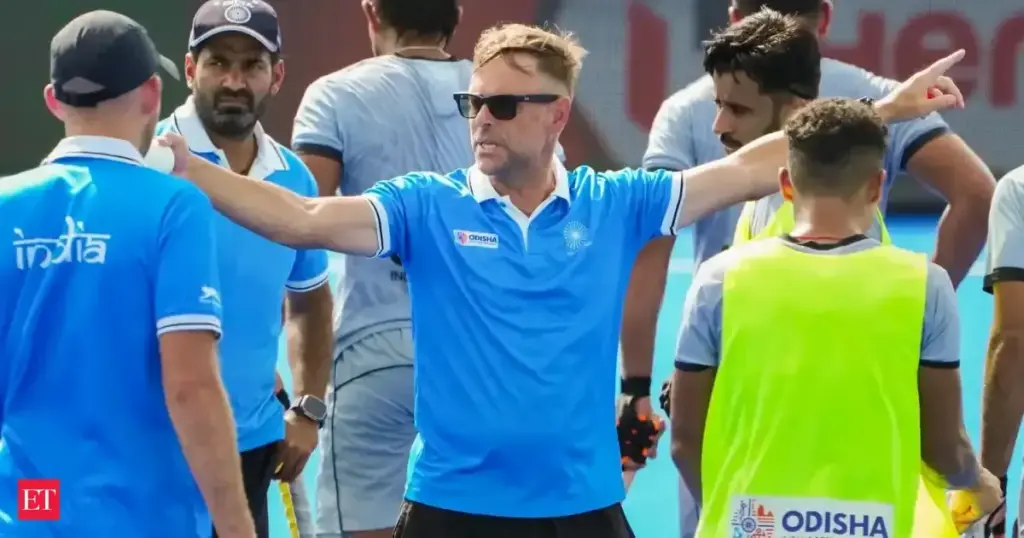
Craig Fulton, the team’s chief coach, acknowledged the difficulty of the tournament but noted that the team aims to create its own history. He mentioned an interesting omen: the captain who lifted the trophy 51 years ago in 1975 was playing in his second World Cup, similar to Harmanpreet Singh’s current situation. Fulton also pointed out that with an eighth-place ranking, the team has a relatively low chance of winning, which he sees as beneficial due to reduced pressure.
Fulton outlined two crucial back-to-back campaigns: the World Cup and the Asian Games, which offers an Olympic ticket. He stated that the team aims to win the Asian Games and secure a podium finish at the World Cup, acknowledging the difficulty of achieving both.
The Asian Games are scheduled to begin just three weeks after the World Cup. This proximity required a different approach to training and preparation. The team utilized a squad of 24 players, including 3-4 goalkeepers, to manage the workload and prevent injuries, ensuring adequate recovery time between tournaments. Fulton noted that playing these back-to-back tournaments puts Asian teams like Malaysia, Japan, Pakistan, and India at a disadvantage for the Asian Games, as other teams not participating in the World Cup will have a singular focus.
Team Strengths and Leadership
Coach Fulton described the team as highly skilled, competitive, and confident. He emphasized a process-driven approach, focusing on each game individually, with the August 15 match against Wales being the immediate priority.
When selecting the squad, Fulton looked for connectivity among players, trust, and adaptability. He also valued players who could play multiple positions, had past experience, and showed potential. The inclusion of younger talent was important for future development, ensuring that the team would not face a significant void if experienced players were to retire after the World Cup.
Fulton praised Harmanpreet Singh’s evolving captaincy, noting that as players mature, they take on more responsibility. He highlighted Singh’s role as his “right arm” and stressed the importance of his communication in providing solutions to the team during challenging moments on and off the pitch. The coach believes the team’s strength lies in its adaptability and its ability to counterattack effectively.
The team has improved its defensive philosophy, aiming to defend to win, and has developed its pressing and counter-attacking capabilities. Fulton explained that the team wants to press and counter from all areas, but also needs to be able to defend effectively when opportunities are not arising. He cited the team’s performance in Paris as an example of their ability to frustrate opponents and capitalize on chances.
To shield players from external pressure, the team focuses on training and individual role definition. Fulton stated that the team is process-driven, tactically sound, and mentally prepared to remain calm during setbacks and maintain composure when things are going well. The team aims to be resilient, bending but not breaking under pressure, as every game, from the first to the last, is crucial.
The Indian team is set to begin their World Cup campaign on August 14.
Source: timesofindia.indiatimes.com
