Kerala: Inquiry report alleges massive scam in failed Messi match plan

An official inquiry report from the Kerala Sports Department has identified what it describes as a significant financial and procedural scam concerning the unsuccessful effort to bring football icon Lionel Messi and the Argentina national football team to the state. The investigation, which was vetted by Sports Department Special Secretary N. Prasanth, has been officially submitted to Chief Minister V.D. Satheesan by Sports Minister O.J. Janeesh.
The report details serious violations of government regulations and an alleged misuse of state resources. It found that Reporter Broadcasting Corporation (RBC) was chosen as the commercial partner for the event without any public tender or competitive bidding process. This unilateral selection raised concerns about transparency and adherence to established procedures for government partnerships.
Allegations of Financial Irregularities and Procedural Lapses
According to the inquiry, the private partner claimed to have transferred Rs. 126 crore to the Argentine Football Association (AFA) via a US-based intermediary. However, investigators found no banking records or documentary evidence to substantiate this alleged transaction. This lack of proof suggests a potential discrepancy in the financial claims made by the private company involved.
Furthermore, the report indicates that no legally binding tripartite agreement was established between the state government, the AFA, and the sponsor. Instead, a general commercial brochure from the AFA was reportedly misrepresented as an official commitment letter. This alleged misrepresentation was used to secure necessary clearances from the Union Sports Ministry and the Reserve Bank of India (RBI), bypassing proper channels and legal requirements.
The inquiry also strongly criticised former Sports Minister V. Abdurahiman for leading a high-profile delegation to Spain. This trip was purportedly for finalising arrangements for the match and allegedly incurred an expense of Rs. 14 crore to the state exchequer. The report suggests that the justification for this expenditure and the trip itself lacked sufficient grounds.
Another significant finding highlighted in the report is the irregular handover of the Kochi Kaloor Stadium to the private sponsor. The venue was transferred under the guise of renovation work related to the match, accompanied by an unauthorised financial concession amounting to Rs. 5 crore. This decision to waive off security deposits, rent, taxes, and other charges for RBC had the official sanction of the Chief Minister, according to the inquiry.

The stadium was made available for construction work without final confirmation of the match, official FIFA/AIFF (All India Football Federation) match registration, prior approval from the Law and Finance Departments, and without insurance and bank guarantee provisions for damage recovery, as mandated by law. The stated goal was to upgrade the stadium to international standards.
Leadership Accountability and Recommendations
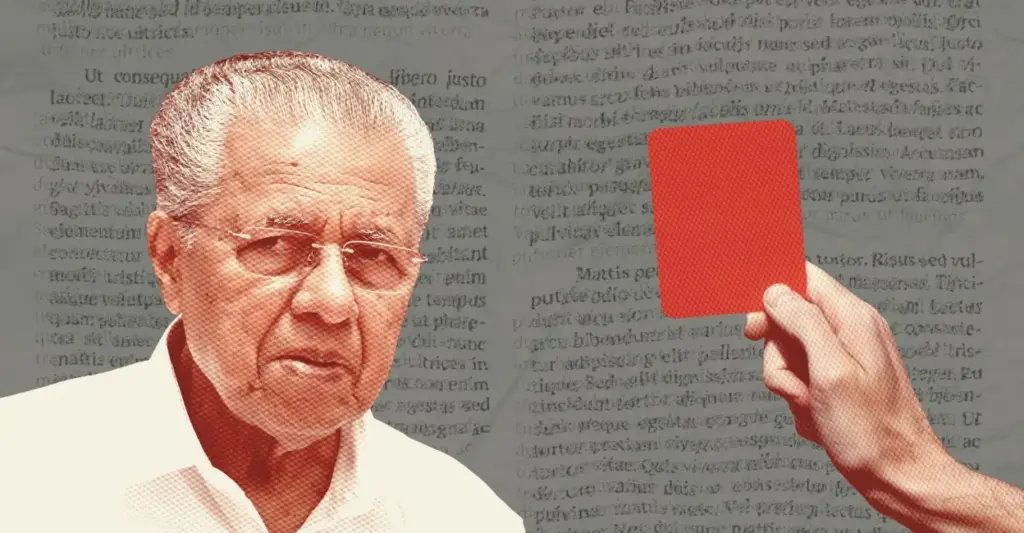
The inquiry report also implicates former Chief Minister Pinarayi Vijayan and former Chief Secretary A Jayatilak, stating that they disregarded constitutionally mandated rules and procedures to expedite an event that lacked a formal commitment from the Argentine Football Association. Records uncovered by N Prasanth show that the former Chief Minister reportedly went out of his way to favour RBC.
The report characterises the entire episode as a multi-crore fraud with potential cross-border implications. It asserts that there is clear evidence of a conscious attempt to circumvent established rules. High-level review meetings chaired by the Chief Minister or Chief Secretary, or committees formed thereafter, are not legally capable of validating such fundamental defects and procedural lapses arising from non-compliance with constitutional file procedures, the report states.
The report was particularly critical of the then Chief Secretary’s role, suggesting that the state government played a secondary role to a private company. It highlights the large-scale deployment of government machinery and IAS officers for a private commercial venture without ensuring necessary safeguards, indicating a grave institutional failure of supervision at the highest level of the Secretariat. This failure suggests either pre-planned connivance or a lack of understanding of basic secretariat processes.
The report emphasizes that the Chief Secretary, in coordinating matters involving various state departments and international contracts, had a specific responsibility to ensure compliance with the Rules of Business, completion of Finance/Law scrutiny, final consent from the AFA, approval from FIFA/AIFF, transparent sponsor selection, exclusion of government liability, and safeguarding public assets. The activation of state machinery without such documentary foundations was deemed not an ordinary failure of coordination.
The inquiry committee has recommended a comprehensive criminal investigation into the matter. It has urged the state government to transfer the case to the Vigilance and Anti-Corruption Bureau and has also called for central agencies to investigate potential money-laundering and Foreign Exchange Management Act (FEMA) violations.
Source: thestatesman.com
