Manu Bhaker speaks on respectful discourse amid debate over language use

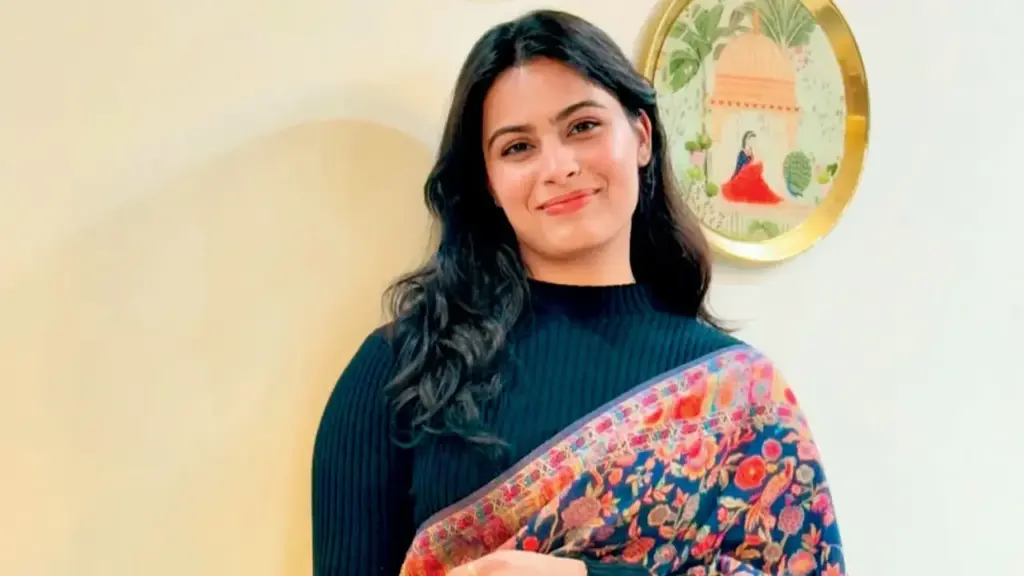
Olympic medallist calls for restraint in public discourse
Manu Bhaker, a two-time Olympic medallist in shooting, has urged for respect and restraint in public discourse, particularly addressing the increasing normalisation of abusive language among young people. She stated that “using bad language is not cool” and encouraged individuals to choose their words carefully. Bhaker’s comments contribute to a broader national discussion regarding the use of cuss words, especially by Gen Z.
The shooter’s remarks follow the circulation of videos from the Cockroach Janta Party (CJP) protest at New Delhi’s Jantar Mantar. These videos reportedly showed some protesters using profane slogans against Prime Minister Narendra Modi, which subsequently ignited a wider debate on the boundaries of political expression and public conversation.
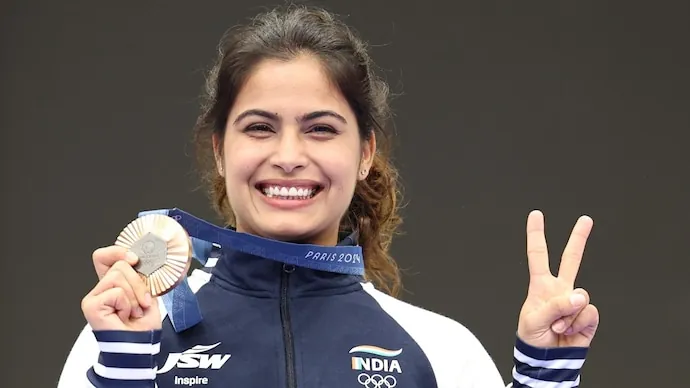
Bhaker emphasised that the language people use reflects their personality and character. In a post on X, she wrote, “The language we choose reflects our personality and the kind of person we are. Choose your words wisely, because over time, you become what you think, what you speak, and what you practice.” She further clarified that profanity should not be equated with confidence or modernity, reiterating, “Using bad language is not cool. Abusing is not cool.”
According to Bhaker, true “coolness” is found in values such as hard work, kindness, respect for oneself and others, striving for success with honesty, and making one’s parents and country proud. She explained her decision to speak on the matter by highlighting how abusive language has gradually become normalised, particularly among the younger generation, with many considering it “cool” without realising its degrading and disrespectful nature.
Public figures weigh in on the debate
The debate surrounding language use during protests has drawn reactions from various public figures, including actors Anupam Kher and Ashutosh Rana. Kher, while acknowledging the students’ success in their protest objectives, expressed his distress over the abusive language directed at the Prime Minister.
Kher posted a video message on X after the protests concluded on July 26, stating, “One thing has saddened me. The way the Prime Minister of India, Narendra Modi, was insulted and disrespected in front of the camera. Seeing that, I was upset.” He framed the issue as being larger than politics, asserting that it concerns the culture society wishes to pass on to future generations. Kher stressed that democracy grants the right to dissent but not the right to disrespect, noting that when arguments cease and abuses begin, only noise remains.
He also underlined the importance of respecting the dignity of the Prime Minister’s office, irrespective of political disagreements. Kher stated, “It is not necessary that we agree with all his decisions. But it is our duty to respect the dignity of any elected Prime Minister.”
Actor Ashutosh Rana also contributed to the discussion, highlighting the significance of responsible public discourse. Rana’s comments were made in response to a controversy involving actor and BJP MP Kangana Ranaut, who had described sections of Gen Z as a “gutter generation” due to their language use during protests.
Speaking to journalists on August 1, Rana differentiated between movements and revolutions, advocating for encouraging young people to express themselves constructively. He suggested that if youth do not share their thoughts and visions for the future, their perspectives cannot be understood. Rana used a metaphor to illustrate the importance of language, stating, “Lions roar, elephants trumpet and dogs bark. Every animal is recognised by its sound and the way it expresses itself. Our words decide whether we receive respect or shame.”
PM Modi’s message and social media responsibility
Prime Minister Narendra Modi, on Friday, July 31, shared a video message on Instagram where he stated he had forgiven the students who had used abusive language during a recent protest at Jantar Mantar. He urged society to guide these students rather than seeking their punishment. Modi’s two-minute video message conveyed, “Children make mistakes, and childhood is also the time when they should be given a chance to correct those mistakes. I want to forgive those who abused me. I request society to accept my decision.”
Separately, Bhaker, who recently won a bronze medal in the 25m pistol event at the ISSF World Cup in Hangzhou, China, also addressed the role of social media. She urged social media influencers to be more responsible and to reduce toxicity, promoting positivity instead. Bhaker, who has 1.4 million followers on Instagram, shared a reel emphasising kindness and positive influences.
She noted that life is unpredictable and urged people to be kind to one another, especially since the younger generation learns significantly from social media. Bhaker observed that while some influencers do good work, others are critical and make negative comments. She questioned the necessity of such negativity, stating, “No one has succeeded in life by trying to pull others down. Negative comments can make or break a person.” She highlighted that personal support during both good and bad times is valuable, encouraging people to cherish their lives and those around them.
Source: indiatoday.in
