Thai footballer killed by lightning strike during match

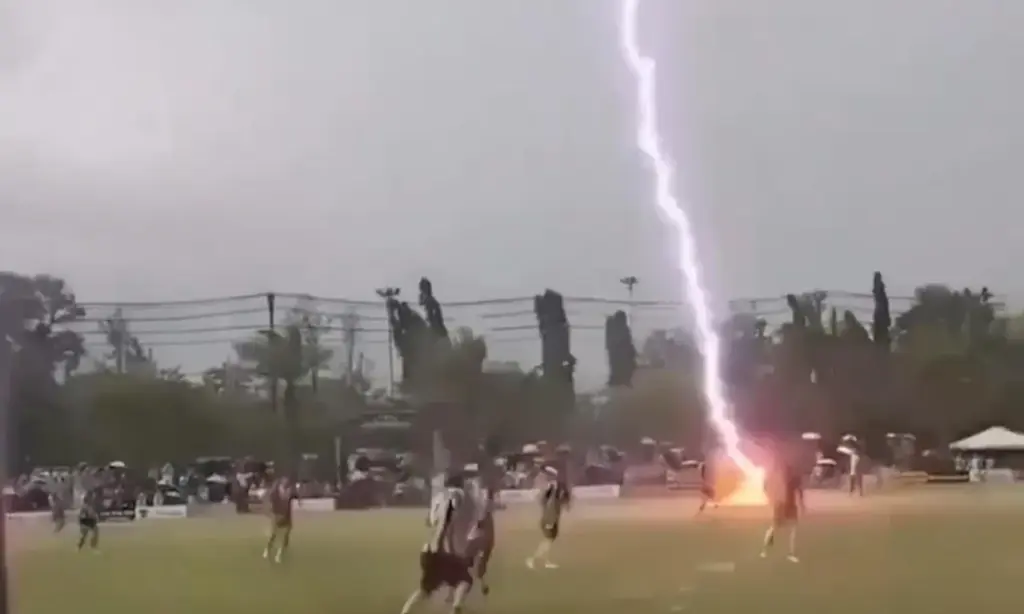
A Thai footballer died and 12 others were injured after a lightning strike during a regional cup match in Thailand. The incident occurred on August 4 at Santiphap Stadium in Sungai Golok, Narathiwat province, during the Golok Cup regional tournament.
Safwan Awae, a 24-year-old winger, was killed in the lightning strike. Among the injured was Malaysian footballer Alif Ezzahan Zulkifli. Spectators provided initial assistance to Awae before emergency services transported him to a hospital, where police later confirmed his death.
A video circulating on social media reportedly shows players continuing to play in the rain before a lightning bolt strikes near them, followed by a bright flash, flames, and smoke. Awae had recently signed with Thai League 3 side Yala FC just six days before the incident. Yala FC posted a tribute to their new signing on social media.
Lightning rules in football
The incident has brought renewed attention to the rules governing football matches during thunderstorms. A widely adopted standard, known as the 30-30 rule, is endorsed by FIFA and used by football associations globally. This rule mandates that if thunder is heard within 30 seconds of a lightning flash, indicating the storm is approximately six miles or closer, play must be suspended immediately, and everyone must leave the pitch.
Once play is suspended, a mandatory 30-minute countdown begins. If another lightning strike occurs during this waiting period, the clock resets to zero. This can lead to prolonged delays, as seen during the 2026 FIFA World Cup in North America, where a group-stage match between France and Iraq in Philadelphia was delayed. Similarly, Mexico’s last-32 clash against Ecuador at the Azteca Stadium started an hour late.
At the 2026 World Cup, the protocols for lightning suspensions were based on guidelines from the United States’ National Oceanic and Atmospheric Administration (NOAA). Any lightning detected within eight miles of the stadium triggered an automatic halt, which FIFA was bound to follow on American soil.
During such suspensions, players and coaching staff return to the dressing rooms, while fans are directed to covered concourses or instructed to evacuate the stadium entirely if there is no roof. Kylian Mbappe described the delay during the France-Iraq match as “a very long evening,” noting the mental and emotional toll of maintaining focus during the extended wait. France manager Didier Deschamps joked that his squad “played cards” during the delay.
The physical challenge for players is also significant, as prolonged breaks can lead to stiffness. During the Chelsea-Benfica delay at the 2025 FIFA Club World Cup, which lasted four hours and 38 minutes from kickoff to final whistle, players used exercise bikes and passed balls to stay loose.
Previous fatalities and safety concerns
Safwan Awae’s death is not an isolated incident. In February 2024, Indonesian player Septian Raharja was killed by lightning during a friendly match. In December 2023, Brazilian player Caio Henrique De Lima Goncalves died during a cup match, and in November 2024, Peruvian defender Jose Hugo de la Cruz Meza was struck while leaving a pitch due to heavy rain.
The repeated fatalities in lower-level matches highlight a disparity in safety measures. While events like the World Cup benefit from advanced lightning detection systems and formal protocols, regional tournaments often lack such infrastructure. The Football Association of Thailand released a statement mourning Awae’s death, and Yala FC posted a tribute to him on social media.
The Golok FA Cup match on August 4 became his last game.
The 30-minute lightning rule exists to prevent such tragedies, and the incident in Thailand underscores the consequences when it is not applied.
Source: timesofindia.indiatimes.com
